
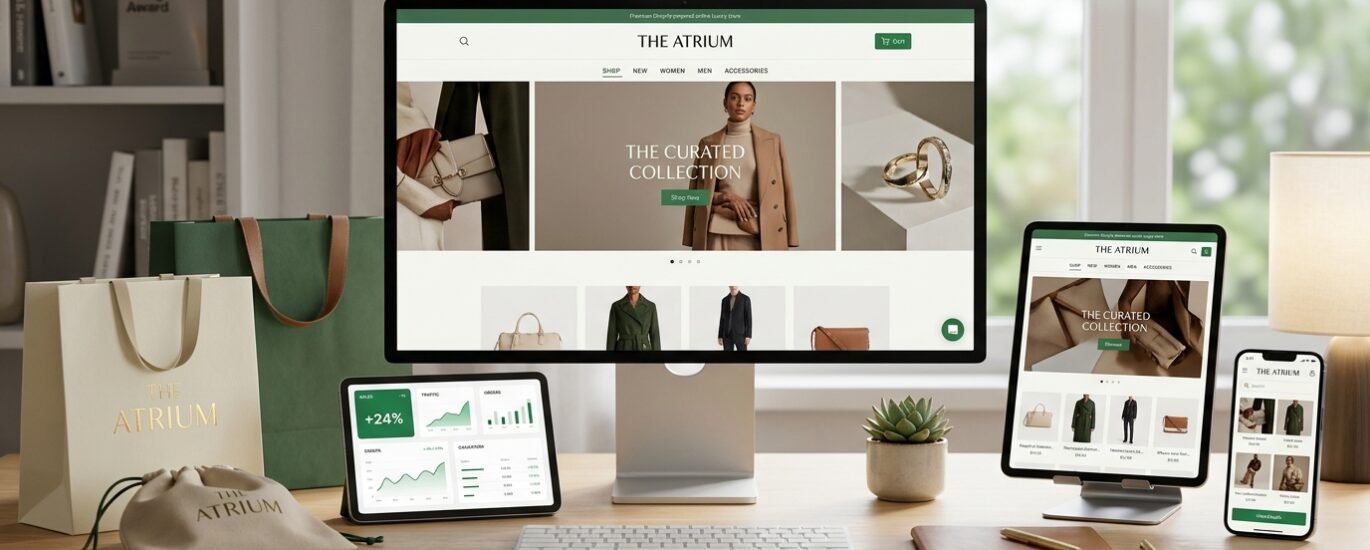
A professional Shopify Store Design is more than an attractive online shop. It directly influences customer trust, search engine rankings, user experience, and ultimately your sales.
Whether you’re launching your first online business or redesigning an existing ecommerce website, investing in an optimized Shopify store can significantly improve conversion rates and long-term growth.
In this guide, you’ll learn how experts design Shopify stores that are visually appealing, SEO-friendly, mobile responsive, and optimized for conversions.
What is Shopify Store Design?
Shopify Store Design refers to the complete planning, creation, customization, and optimization of an online store built on the Shopify platform.
A professionally designed Shopify store includes:
- Modern homepage
- User-friendly navigation
- High-converting product pages
- Fast loading speed
- Mobile responsiveness
- Secure checkout
- SEO optimization
- Brand consistency
- Conversion-focused layouts
Good design isn’t just about appearance—it helps customers find products quickly and complete purchases with confidence.
Why Professional Shopify Store Design Matters
Today’s online shoppers judge a business within seconds.
A poorly designed store often leads to:
- High bounce rates
- Low trust
- Cart abandonment
- Poor SEO rankings
- Lower conversion rates
A professionally designed Shopify store helps:
- Increase sales
- Improve customer trust
- Enhance user experience
- Rank better in Google
- Reduce abandoned carts
- Build long-term brand credibility
Benefits of Professional Shopify Store Design
1. Better User Experience (UX)
Customers should reach products in just a few clicks.
Good UX includes:
- Clear navigation
- Fast search
- Organized categories
- Easy filtering
- Mobile optimization
2. Higher Conversion Rates
Professional layouts guide visitors toward purchasing.
Conversion optimization includes:
- Clear Call-to-Action buttons
- Product recommendations
- Trust badges
- Reviews
- Simple checkout
3. Improved SEO Performance
Google rewards websites that provide a positive user experience.
SEO-friendly Shopify stores feature:
- Clean URL structure
- Optimized headings
- Schema markup
- Image optimization
- Internal linking
- Fast loading pages
4. Mobile-Friendly Shopping Experience
More than half of ecommerce purchases now happen on smartphones.
A responsive Shopify design ensures:
- Easy navigation
- Touch-friendly buttons
- Fast mobile performance
- Responsive product images
5. Strong Brand Identity
Consistent branding creates customer trust.
Maintain consistency across:
- Colors
- Fonts
- Logos
- Product photography
- Icons
- Marketing banners
Essential Elements of High-Converting Shopify Store Design
Homepage
An effective homepage should include:
- Hero banner
- Featured collections
- Best-selling products
- Customer reviews
- Promotional offers
- Newsletter signup
- Brand story
Navigation Menu
Simple navigation improves both usability and SEO.
Recommended menu:
- Home
- Shop
- Collections
- Best Sellers
- New Arrivals
- About
- Blog
- Contact
Collection Pages
Well-designed collection pages help customers browse efficiently.
Include:
- Product filters
- Sorting options
- Category descriptions
- SEO content
- Breadcrumb navigation
Product Pages
Every product page should contain:
- High-quality images
- Product videos
- Clear pricing
- Product descriptions
- Size guides
- Reviews
- FAQs
- Shipping details
- Return policy
- Related products
Shopping Cart
Reduce friction by displaying:
- Shipping estimates
- Coupon field
- Trust badges
- Payment icons
- Recommended products
Checkout Experience
Shopify already provides an excellent checkout system.
Enhance it with:
- Multiple payment methods
- Secure SSL
- Express checkout
- Guest checkout
- Clear shipping information
Shopify Store Design Best Practices
Keep Navigation Simple
Avoid overwhelming visitors.
Use straightforward menus and logical categories.
Prioritize Speed
Fast websites convert better.
Optimize:
- Images
- Apps
- Themes
- Fonts
- JavaScript
Use High-Quality Images
Professional photography increases trust.
Optimize images by:
- Compressing files
- Using descriptive filenames
- Adding ALT text
- Choosing modern formats like WebP
Example ALT text:
Shopify Store Design for Fashion Ecommerce Website
Build Trust
Customers purchase from stores they trust.
Display:
- Customer reviews
- Secure payment badges
- Contact information
- Return policy
- Refund policy
- About page
Optimize Product Descriptions
Don’t copy manufacturer descriptions.
Write unique content that explains:
- Features
- Benefits
- Specifications
- Usage
- FAQs
Shopify Store SEO Checklist
Before launching your store, verify:
✔ SEO-friendly URLs
✔ Meta titles
✔ Meta descriptions
✔ Heading structure
✔ XML sitemap
✔ Robots.txt
✔ Internal links
✔ Image ALT tags
✔ Product schema
✔ Breadcrumb schema
✔ Collection optimization
✔ Blog integration
✔ Mobile responsiveness
✔ Core Web Vitals
✔ HTTPS enabled
Common Shopify Store Design Mistakes
Avoid these issues:
- Too many popups
- Slow-loading pages
- Poor mobile design
- Cluttered homepage
- Weak product descriptions
- Low-quality images
- Broken links
- Missing trust badges
- Complex navigation
- Too many apps
Recommended Shopify Apps
Popular apps include:
- Judge.me Reviews
- Shopify Inbox
- Klaviyo
- Search & Discovery
- TinyIMG SEO
- PageFly
- ReConvert
- Matrixify
- Shopify Email
Only install apps that provide measurable value to maintain performance.
Shopify Store Design Trends for 2026
Modern ecommerce stores are embracing:
- AI-powered product recommendations
- Personalized shopping experiences
- Interactive product galleries
- Video-first product pages
- Minimalist layouts
- Voice search optimization
- Accessibility improvements
- Dark mode support
- Faster headless commerce implementations
- AI-assisted customer support
These trends improve both customer satisfaction and business performance.
Who Needs Professional Shopify Store Design?
Professional Shopify design is ideal for:
- Startups
- Small businesses
- Fashion brands
- Beauty brands
- Electronics stores
- Furniture stores
- Pet product businesses
- Jewelry brands
- Home décor companies
- Health & wellness brands
- Dropshipping businesses
- B2B ecommerce companies
Why Choose Freelance Marketing Agency?
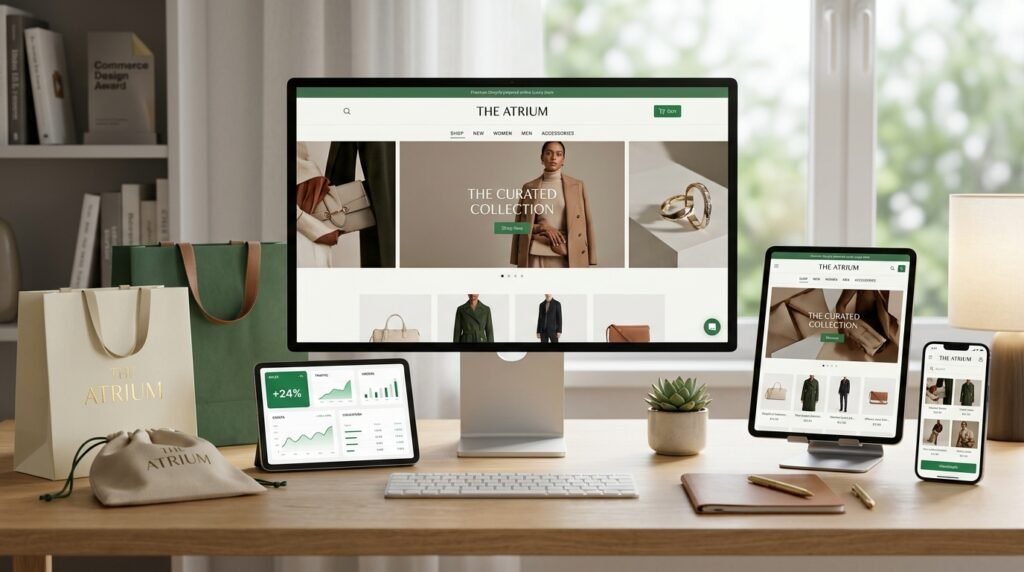
At Freelance Marketing Agency, we create Shopify stores that balance aesthetics with measurable business outcomes. Our approach combines UX design, technical SEO, performance optimization, and conversion rate optimization to help businesses attract qualified traffic and turn visitors into customers.
Our Shopify services include:
- Custom Shopify Store Design
- Shopify Theme Customization
- Store Migration
- Product Upload & Organization
- Technical SEO
- Speed Optimization
- Conversion Rate Optimization (CRO)
- Mobile Optimization
- Shopify Maintenance
- Ongoing Support
Frequently Asked Questions
How much does Shopify Store Design cost?
Costs vary depending on customization, features, integrations, and business requirements. A professionally designed custom store generally costs more than a basic template but offers greater flexibility and long-term value.
Is Shopify good for SEO?
Yes. Shopify provides SEO-friendly features such as customizable meta tags, clean URLs, XML sitemaps, SSL security, mobile responsiveness, and support for structured data.
Can I redesign my existing Shopify store?
Absolutely. Existing stores can be redesigned without losing products or customer data when planned correctly.
How long does Shopify Store Design take?
A standard Shopify store typically takes between 2–6 weeks, depending on complexity, content readiness, and custom functionality.
Explore more about our Shopify Course
Final Thoughts
An effective Shopify Store Design combines thoughtful user experience, technical optimization, strong branding, and conversion-focused layouts. By following current SEO best practices, maintaining a fast and mobile-friendly experience, and continuously testing improvements, your Shopify store can attract more qualified visitors and convert them into loyal customers.
Whether you’re launching a new ecommerce business or refreshing an existing store, investing in professional Shopify design lays the foundation for sustainable online growth.
Shopify Store Design Supported by Professional Development
Professional Shopify store design focuses on branding, mobile usability, navigation, product presentation, and conversion-friendly layouts. Businesses requiring deeper integrations or custom functionality can combine design with our Shopify store development services.
Shopify brands can also improve performance through website speed optimization, rebuild outdated stores through website redesign services, or explore broader ecommerce website development if Shopify is not the right platform for their requirements.